Discover La Corsa all’Anello
La Corsa all'Anello
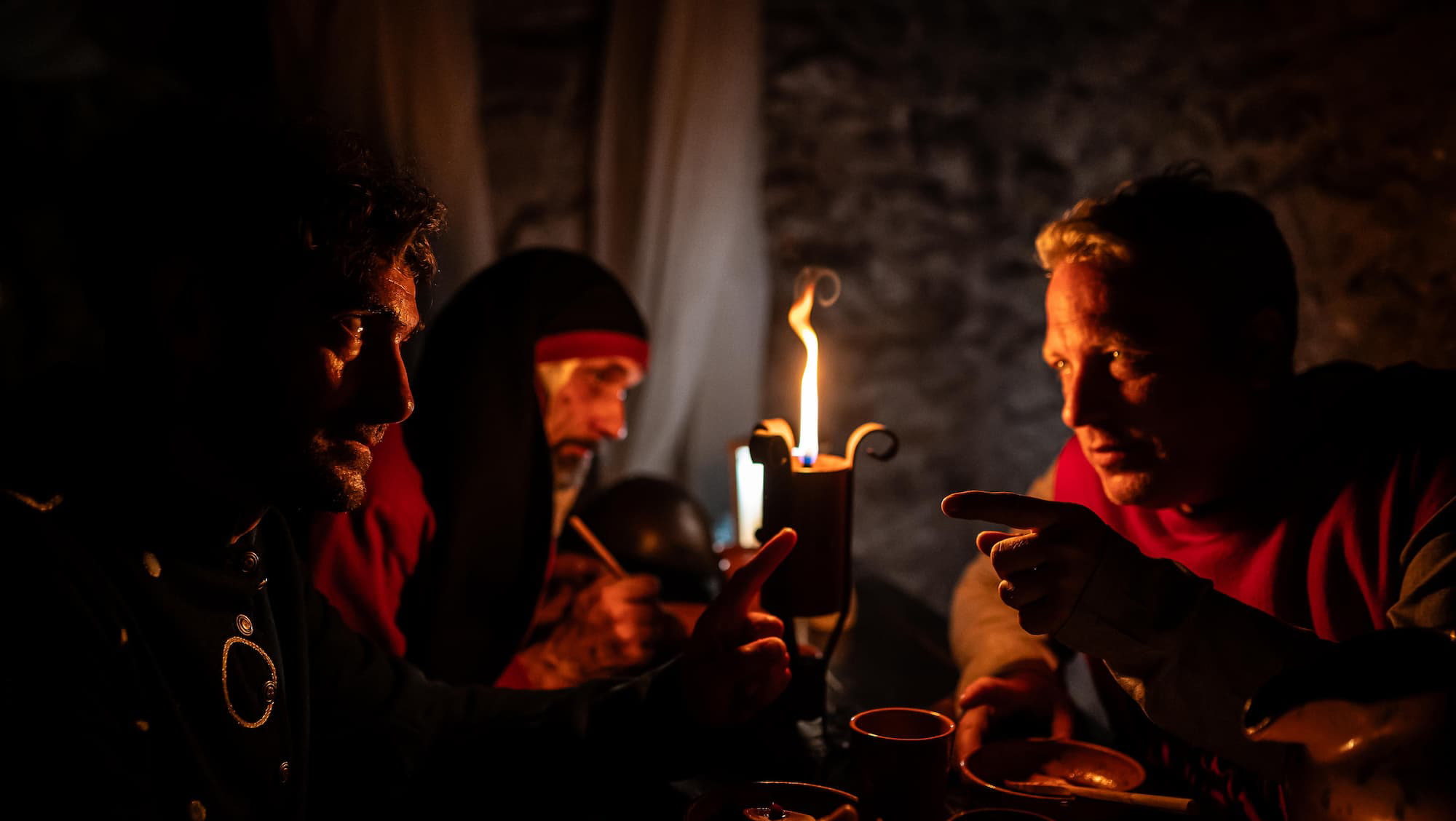
During this period, Narni undergoes a profound transformation, symbolically returning to the year 1371—the historical moment that inspires all the celebrations. Streets, squares, and alleys of the historic center take on a new appearance: the atmosphere, costumes, and daily life are infused with a medieval spirit, offering visitors and residents a unique immersive experience into history.

From tradition to the modern competition
In the ancient city statutes, the de anulo argenteo currendo was described as the most important and coveted contest, reserved for the finest knights of the territory. The prize was a substantial reward of one hundred Cortonese coins, won by attempting to spear—at full gallop and with a lance—a small iron ring suspended in the air. Today, this tradition lives on in the evocative Historical Race, held on May 3, the day dedicated to the patron saint, in the ancient Platea Maior (present-day Piazza dei Priori).
Although rooted in this tradition, the Corsa all’Anello takes place today according to modern rules and is held at the Campo de li Giochi on the second Sunday of May. Competing for the silver ring are the city’s three historic Terzieri: Mezule, with black and white colors; Fraporta, in red and blue; and Santa Maria, whose banner is orange and purple. Each Terziere has its own stable, where horses and riders train, and a tailoring workshop dedicated to creating the costumes for the grand historical procession and for the groups that bring the festival to life: archers, dancers, flag-throwers, musicians, and swordsmen, who perform throughout the streets and squares of the city.


Roll of Honour

Mezule
1969
1980
1982
1985
1986
1987
1990
1992
1994
1998
2001
2006
2007
2008
2009
2010
2013
2019 La Rivincita
2022

Fraporta
1970
1972
1974
1977
1988
1989
1991
2004
2016
2017 La Rivincita
2019 La Sfida
2021 Secondo Aevo
2023
2024

Santa Maria
1971
1973
1975
1976
1978
1979
1981
1983
1984
1993
1996
1997
1999
2000
2002
2003
2005
2011
2012
2014
2015
2017 La Sfida
2018 La Rivincita
2018 La Sfida
2025
The Equestrian Joust
The Corsa all’Anello is the climax of the festival: an intense equestrian competition where speed, precision, and nerve determine the outcome of the challenge.
At the Campo de li Giochi, riders representing the three terzieri face each other in a high-speed run along an elliptical track. The aim is to spear, with a lance and at full gallop, a small iron ring suspended in the air—just a few centimetres wide—within a split second. Every movement must be perfect, and even the smallest mistake can prove decisive.
The contest does not end with the first strike. A mechanical device activated by the rider who reaches the ring first can cause the opponent’s ring to fall, making each round unpredictable until the very last moment. It is this element that turns the race into a thrilling spectacle, where technique and strategy meet the adrenaline of the crowd.
The Corsa all’Anello is not only a sporting competition, but a collective ritual that embodies the honour of the terzieri and the passion of an entire city.

The Grand Historical Procession
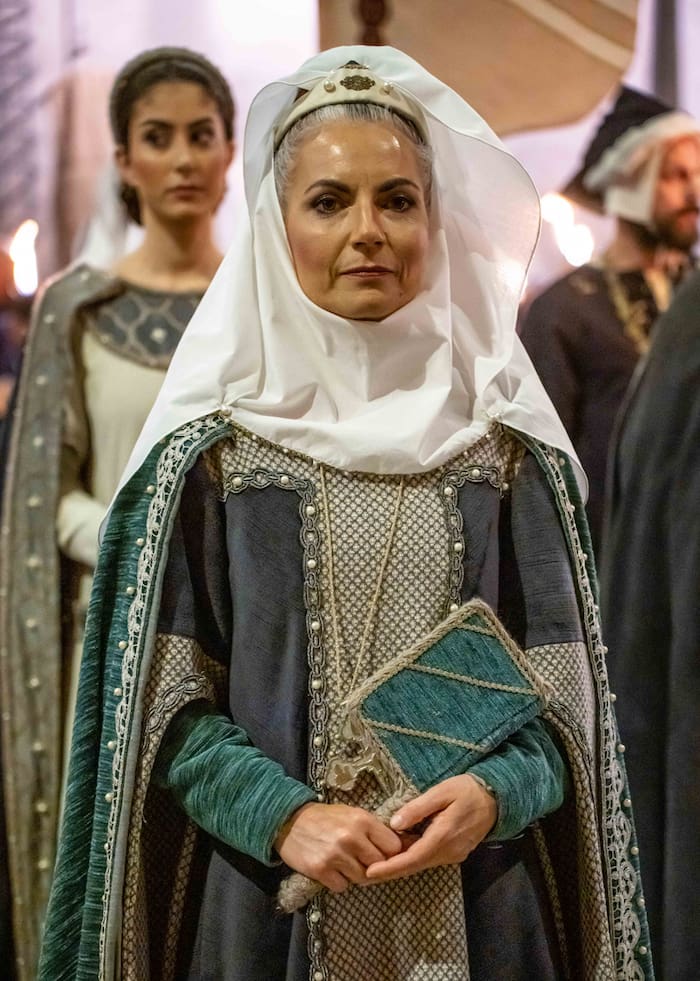
On the evening before the Corsa all’Anello, Narni comes to a halt and travels back in time with the Grand Historical Procession, one of the most anticipated and symbolic moments of the entire event. Considered one of the most fascinating in Italy for its grandeur, visual impact, and historical accuracy, the Procession represents the historical and cultural soul of the Corsa all’Anello.
More than a thousand participants parade through the streets of the historic center, reenacting the solemn procession in honor of Saint Juvenal as it took place in 1371—the reference year for the entire event. Each character is the result of meticulous historical research: garments, fabrics, colors, and accessories are reconstructed based on iconographic and documentary sources, offering an authentic portrayal of medieval Narni society.
Nobles, magistrates, clergy, men-at-arms, knights, ladies, artisans, and townspeople come together to form a living tableau, capable of conveying the complexity and vitality of the city in the 14th century. The ancient streets, illuminated by the glow of torches, echo with the measured rhythm of the Procession, while the wind stirs the banners of the Terzieri and the city—wrapped in light and shadow—seems to rediscover itself in its own past.
The Grand Historical Procession is not merely a parade, but a collective ritual that involves the entire community: a moment of sharing and remembrance in which Narni tells its story through history, passion, and the sense of belonging of those who, year after year, make this extraordinary journey through time possible.